Grading, Site Prep, and House Pad in Faulkner County
This customer requested a house and shop pad to be constructed. This field is in a low area, so the drainage capability of the pad was a priority.
Generally, a good pad is constructed by the following steps:
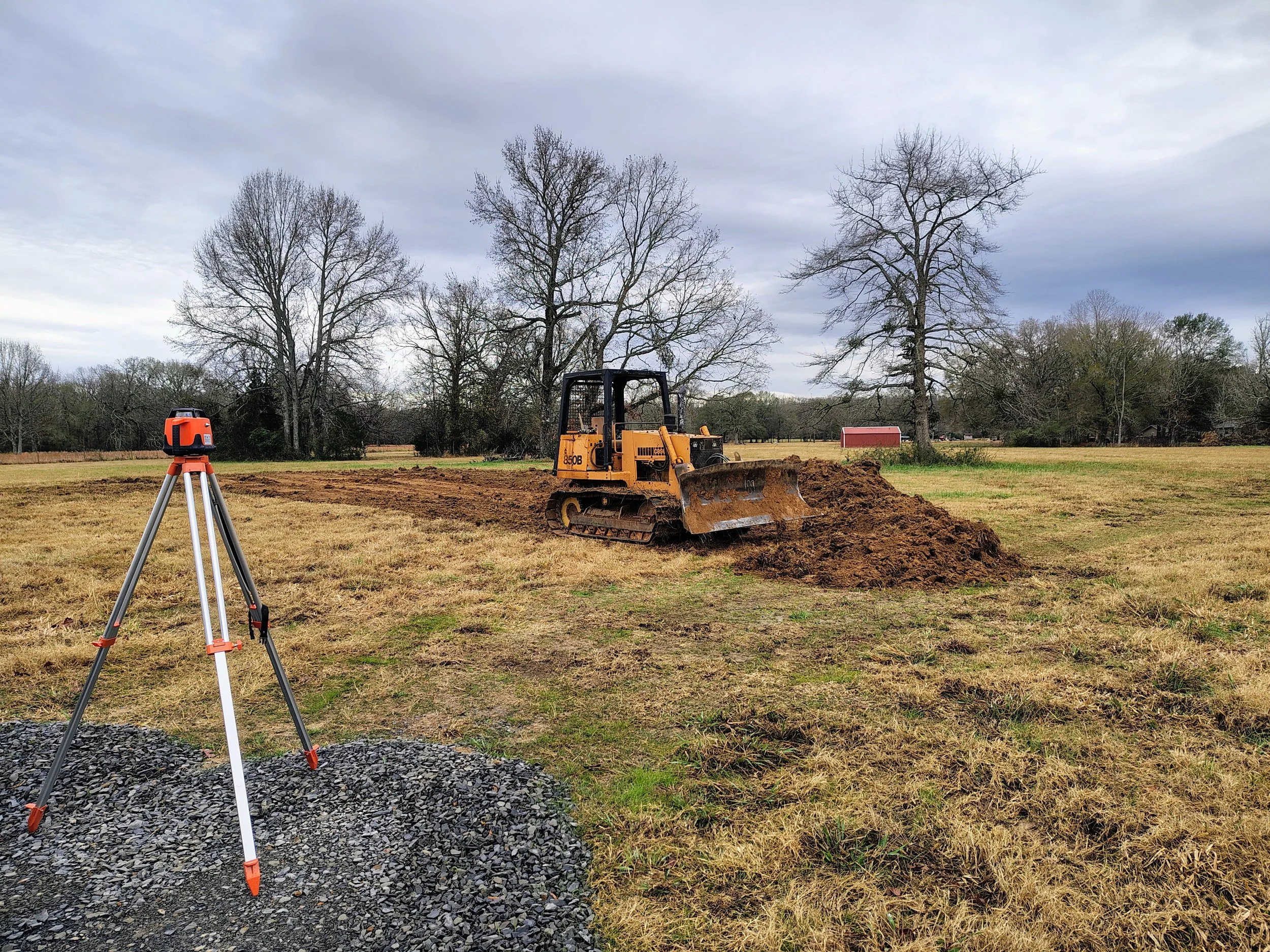
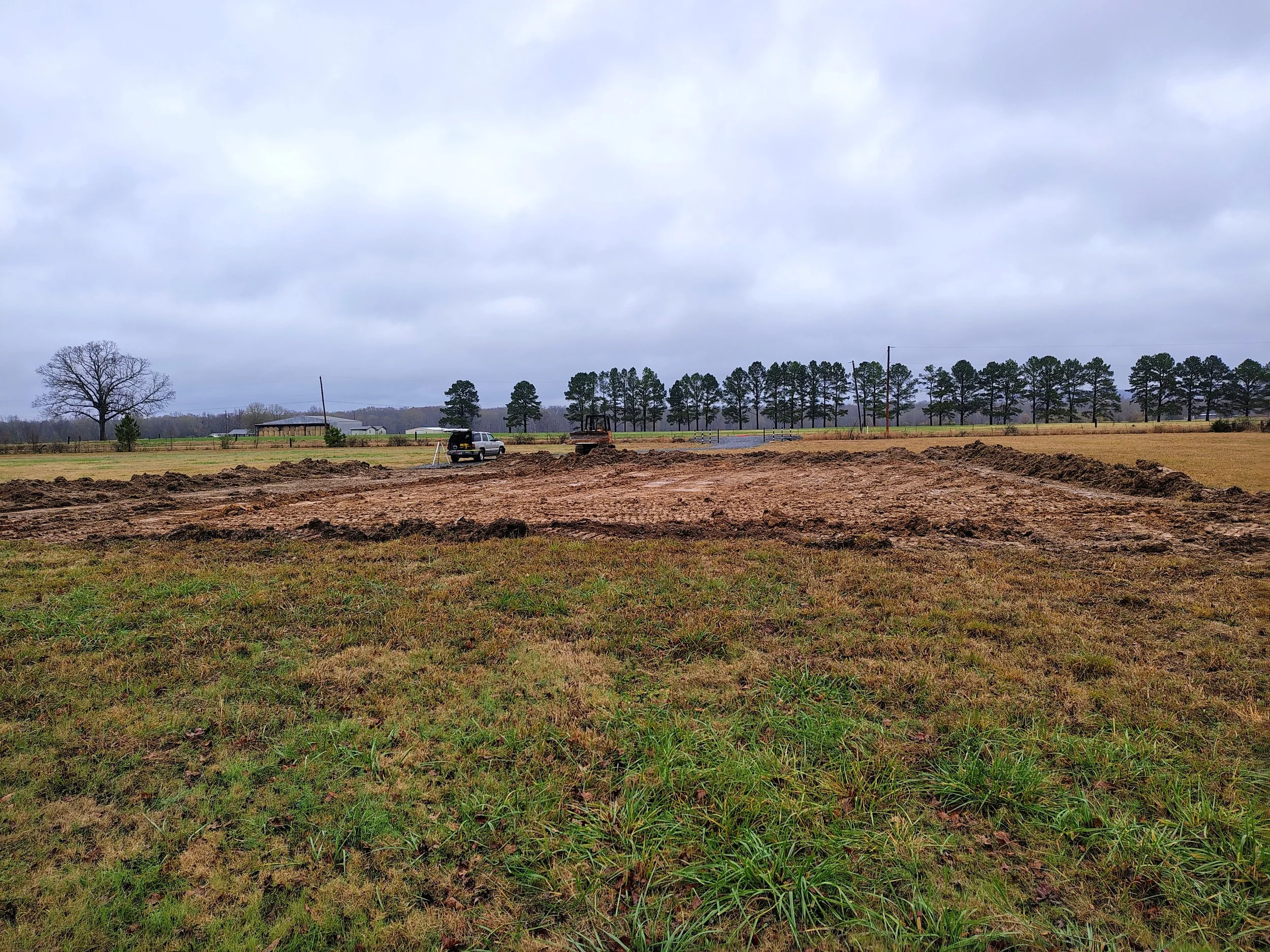
Strip away top soil and remove all organic material. The healthy black dirt will be pushed to the side and saved for later use, while the deep brown colored clay will be revealed.
Clay is an excellent 1st layer in a base. This clay is pushed out, leveled, and compacted.
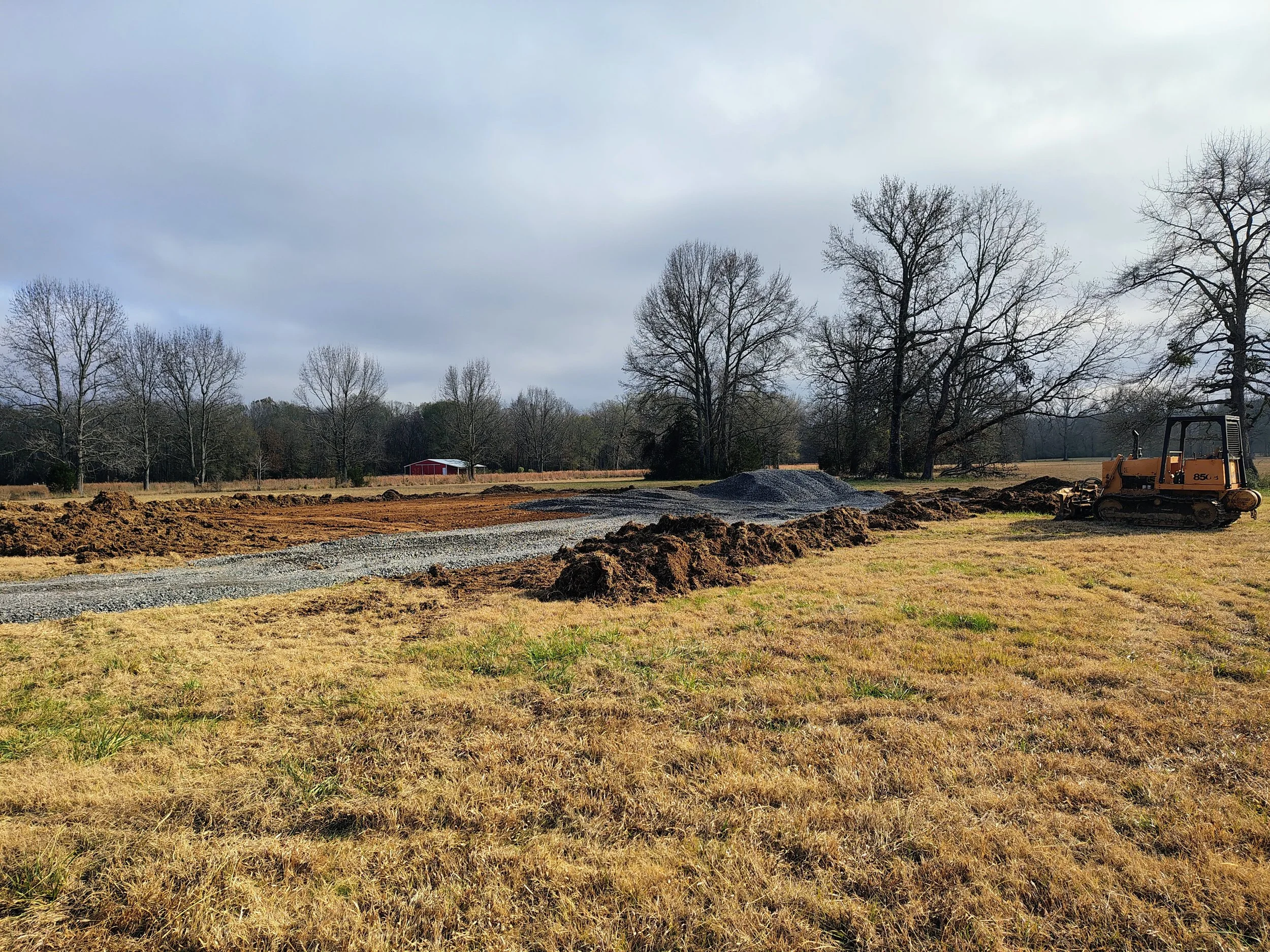
A great 2nd layer in a base is shale. Shale rock breaks up and compacts into a solid layer that supports the gravel with localized loading (i.e. - vehicles, equipment, etc.).
A variation of gravel makes up the final layer in a base. Depending on the goals of the customer, a specific grade of gravel is spread and compacted to finalize the base before the concrete is delivered. The gravel may be:
Class 57 (3/4” washed stone) or 1” washed stone is laid down where drainage is the most important, and compaction is not as critical. The stone material is leveled under the concrete pad, but pushes around due to the lack of “fines” in the mixture. Typically around $600-650 per 15 yards.
Dark blue commercial base is useful where compaction is most important, but drainage is not as critical. This is the ideal material for a driveway, but water runs over the top of the stone rather than draining through. This is because of the grade of fines mixed in with crushable rock. Typically around $450-500 per 15 yards.
SB2 is selected when a balance of drainage and compaction are desired. Many driveways are constructed of this material for this reason. Additionally, because this is one of the most commonly produced quarry products, the price is the lowest. Typically $400-450 per 15 yards.
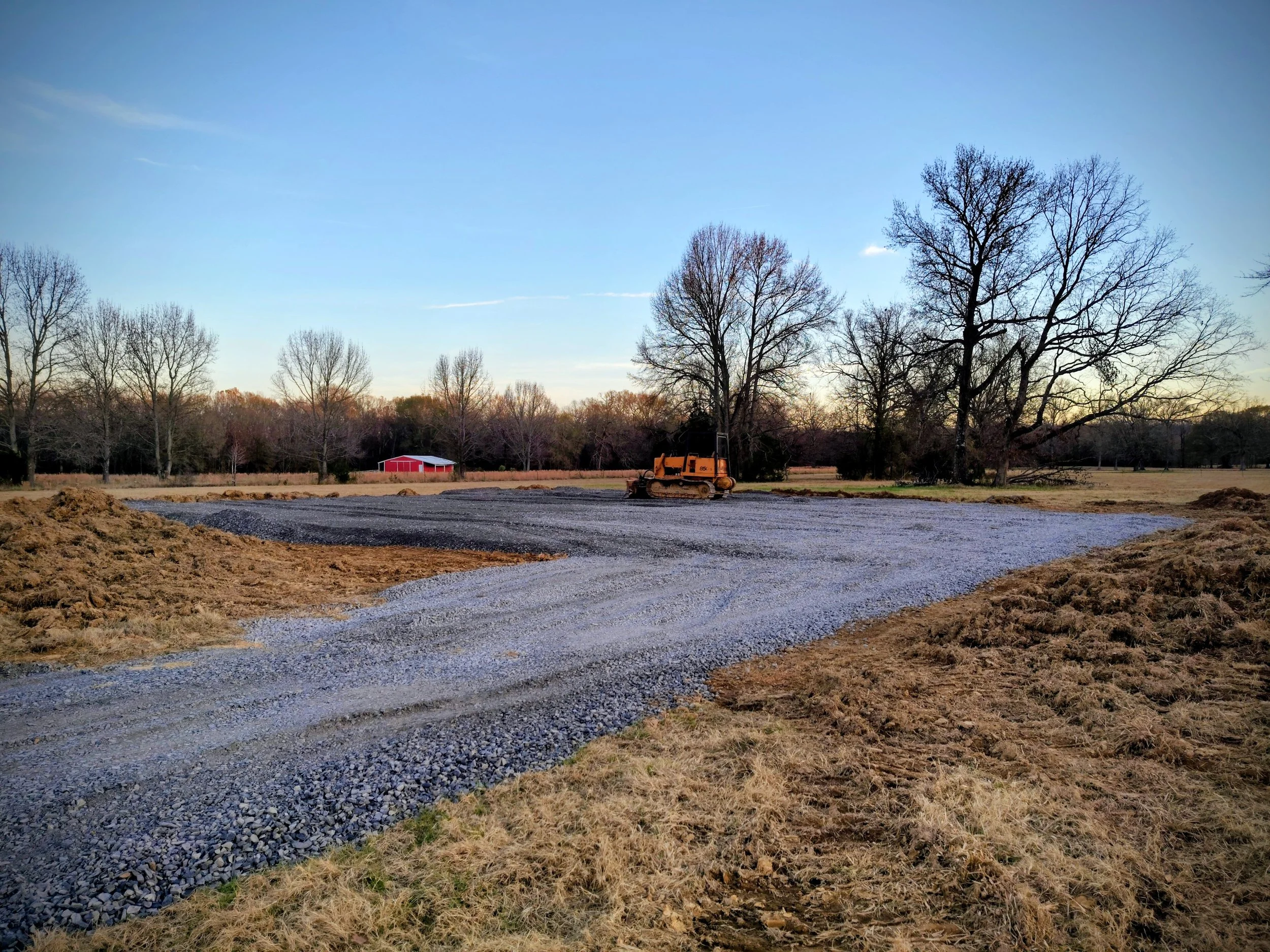
This customer opted to construct the base out of clay as the base, then a thick layer of SB2 gravel for an optimized drainage and compaction. The topsoil at the end of the project is spread up to the gravel line to provide a uniform transition between the gravel and yard.
The guidelines mentioned above are not step-by-step rules to follow, but general principles to follow for a pad or driveway that will last. Your situation and budget will dictate the optimal strategy. Contact us to discuss your pad or driveway project!